
- 29 Jul, 2026
- Dr. Arun Rajeswaran
- No comment
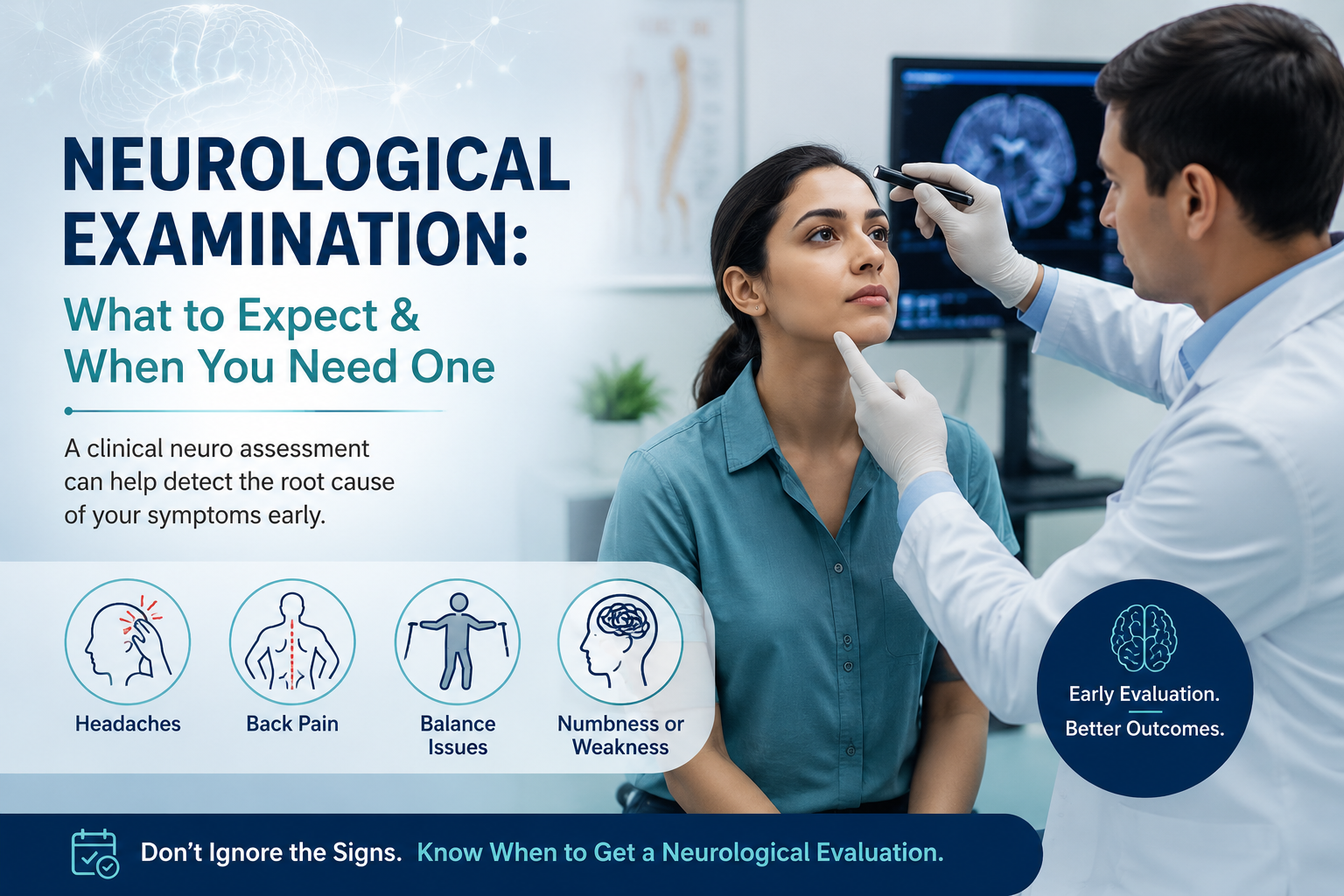
The Patient’s Guide to a Neurological Examination: What to Expect and When You Need One
Wondering what happens in a neurological exam? Learn the signs you need a clinical neuro assessment for headaches, back pain, and balance issues.
Upon experiencing frequent headaches, inexplicable numbness or altered coordination, one will be referred by a general physician to a specialist for a comprehensive neurological examination test. Most individuals fear hearing about a “neurological test” because of the complex picture that comes to mind.The truth of the matter is that a basic neurological test is a simple set of physical and mental tests which enable a specialist to evaluate the proper function of the brain, spine and peripheral nerves of an individual.If you have been referred to a neurological test in Dubai or anywhere else, then understanding what a neurological test entails will help you to feel at ease.
 What is a Neurological Examination?
 What is a Neurological Examination?
Fundamentally, this is a systematic assessment conducted for identifying, locating, and assessing the seriousness of nervous system problems. Different from a regular physical examination where attention is given more to the patient’s heart and lung, the neurological assessment aims at analyzing the efficiency of transmission of electrical signals through the body.
Nervous system is basically split into two major parts, which include the central nervous system (consisting of the brain and the spinal cord) and peripheral nervous system (nerves connected to the organs, skin and muscles). Through the tests of certain behaviors and bodily reactions, a specialist can pinpoint where exactly the problem stems from. This is the first stage prior to conducting any costly and time consuming tests such as MRI or CT scan.
Major Signs You Need a Neurological Exam
It can be difficult to know when an everyday ache crosses the line into a neurological concern. While individual symptoms vary, several clear clinical indicators point to a distinct need for a comprehensive evaluation:
- Chronic, Unremitting, or Changing Headaches: A regular headache pattern that suddenly alters, grows intensely severe, or fails to respond to standard medical management.
- Persistent Numbness or Tingling: A chronic “pins and needles” sensation or localized numbness that travels down an arm or leg, often pointing to nerve root compression.
- Unexplained Muscle Weakness: Sudden difficulty lifting your foot (foot drop), dropping items frequently, or experiencing noticeable asymmetrical weakness on one side of your body.
- Balance and Coordination Distortions: Dizziness, an unsteady gait while walking, or a feeling that the room is spinning (vertigo) without an obvious inner ear cause.
- Cognitive or Sensory Shifts: Gradual memory changes, sudden speech slurring, vision disruptions, or unexplained alterations in your sense of smell or taste.
What Happens in a Neurological Exam?
A thorough clinical assessment is broken down into specific operational components. The specialist evaluates different functional loops of the nervous system through simple, physical tasks.
1. Mental Status and Cognitive Function
Once your practitioner enters the room, the test commences. Through normal conversations, he evaluates your state of alertness, language skills, memory ability, and orientation to time and place. He may ask you to memorize three simple words, repeat a sentence, or answer easy questions regarding contemporary issues. This is done to determine your level of cognitive performance.
2. Cranial Nerve Exam
The cranial nerves are twelve pairs of specialized pathways that emerge directly from the base of the brain, controlling sensory and motor functions in the head and neck. Testing them is vital for isolating brainstem or localized cerebral issues:
- Vision and Eye Movement: You will track a finger or moving object with your eyes to check the nerves governing ocular mobility, and your pupils will be checked with a small light pen to ensure proper constrictive response.
- Facial Sensation and Strength: The specialist may lightly tap areas of your face to verify sensory pathways or ask you to smile, frown, and puff out your cheeks to evaluate facial muscle symmetry.
- Hearing and Swallowing: Your hearing may be checked with a simple whisper test, and your gag reflex or swallowing motion will be monitored.
3. Motor and Sensory Function Testing
To evaluate your peripheral nerves and spinal pathways, the specialist checks muscle tone, raw strength, and sensory perception across all four limbs:
- Motor Assessment: You will be asked to push, pull, and squeeze against the specialist’s hands using your arms, wrists, fingers, thighs, and ankles. This reveals localized muscle weakness or subtle signs of central nerve damage.
- Sensory Mapping: Using a soft cotton wisp, a dull pin, or a vibrating tuning fork, the clinician will gently touch different patches of skin on your arms and legs. You will report whether the sensations feel equal on both sides of your body.
4. Reflex Testing
The deep tendon reflex test is probably the most recognizable component of the examination procedure. With a little rubber reflex hammer, your specialist will gently tap particular tendons in your elbows, wrists, knees, and ankles.
A sudden muscle jerk response is an involuntary loop that does not involve the brain at all. A negative, delayed, or overactive reflex indicates exactly where there may be interference in an electrical impulse traveling through the spinal tract.
5. Coordination and Gait Analysis
Lastly, your balance and spatial perception will be tested as well. This may involve tasks such as touching your nose using your index finger, tapping your fingers quickly, and walking across the room in a straight line using your heel and toe. The specialist will examine your posture, arm swing, and balance in order to ensure that your cerebellum is functioning properly.
Neuro Exam for Headaches: A Specific Focus
If you go for a consultation because of having constant pain in the head, the neurologic examination of your headaches becomes very particular. Here, the main task is to distinguish between benign primary headaches (e.g., very severe migraines and tension-type headaches) and secondary headaches related to pathological changes in the structure, vascular problems, or intracranial hypertension.
As part of a headache neurological exam, there will be an additional examination of the optic nerves in the back of your eye using an ophthalmoscope. Their swelling (papilledema) is indicative of dangerous pressure accumulation in the brain.
In addition, your neck rigidity, jaw pain, and possible asymmetry of the functioning of the cranial nerves will be carefully examined.
Seeking Specialized Evaluation
Navigating brain, spine, and nerve symptoms requires precision and personalized care. If you are noticing warning signs or require a formal clinical assessment, seeking guidance from an established specialist is an essential step forward.
To explore options for a dedicated neurologist consultation or review comprehensive treatment pathways, visit Dr. Arun Rajeswaran’s official website to connect with an experienced medical team.