
- 04 Feb, 2026
- Dr. Arun Rajeswaran
- No comment
Sciatica Pain Causes, Symptoms & Treatment in Dubai
Pain in the lower back that spreads down one leg is something a lot of people just get used to over time. Many blame it on poor posture, sitting for too long, or working extended hours. In areas where people often have desk jobs or endure long commutes, this type of pain tends to become an everyday issue. However, when pain follows this specific pattern, it is often tied to sciatica pain, which happens due to nerve problems and should not be overlooked.
Dealing with sciatica can drain your energy. It can make basic movements hard, disturb your sleep, and restrict your daily life. The good news is that when identified, most people find significant relief with proper treatment.
What Is Sciatica?
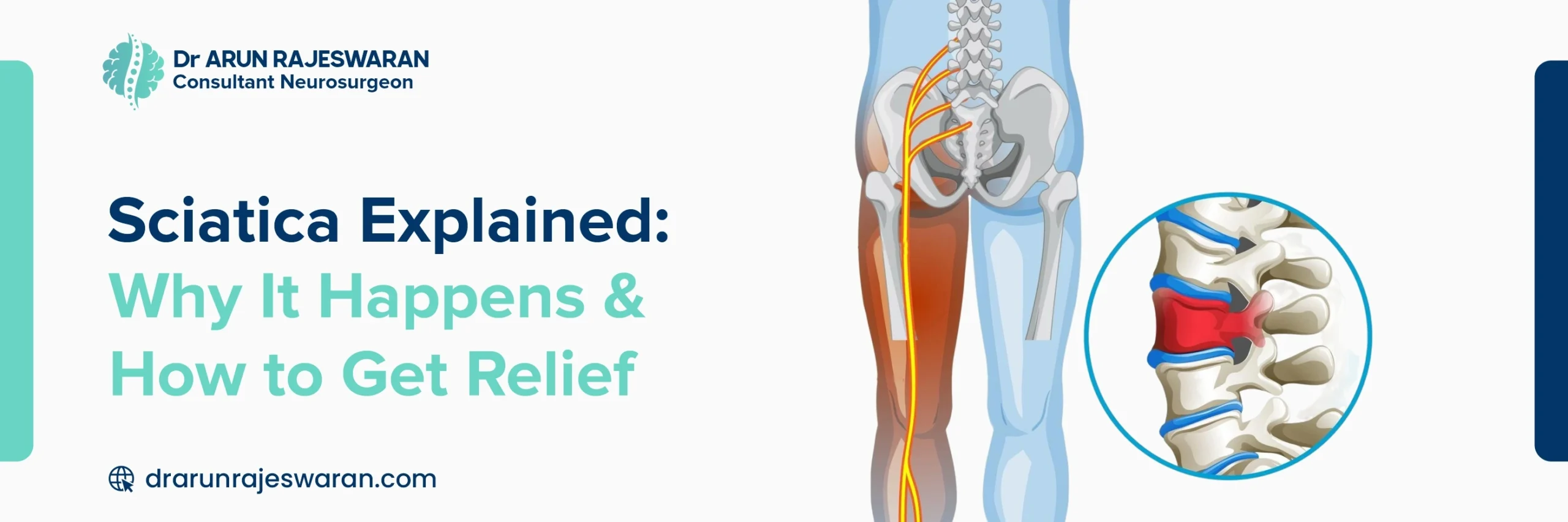
Sciatica starts when something irritates or squeezes the sciatic nerve. This nerve is the body’s longest. It begins in the lower back, moves through the hips and buttocks, and stretches down both legs.
Pain shows up when pressure builds on this nerve. It happens on one side and can feel different for each person. Some may notice a deep ache, while others feel sharp burning pain. For some, it hurts enough to make sitting or walking hard.
What Causes Sciatica?
Sciatica is not a problem on its own. It signals an issue with the spine. Common reasons include discs that slip or bulge, changes to the spine from aging, or narrowing in spots where nerves pass through.
The things you do every day impact your health more than most people think. Spending hours sitting, having adjusted workstations, not being active enough, or driving too often can put extra pressure on your lower back. This extra stress can lead to sciatica pain, which might not go away by itself.
Recognizing Sciatica Symptoms Early
Noticing sciatica symptoms is key to stopping nerve problems from getting worse. Many delay getting help because the pain often comes and goes.
Some common sciatica symptoms are:
- Pain that starts in your lower back and spreads to your leg
- Numbness or tingling in your foot, thigh, or buttock
- Weakness in your leg that is affected
- Worsening pain after long periods of sitting
Because sciatica symptoms often begin as mild discomfort, a lot of people dismiss them at first. They don’t pay attention until moving around each day becomes hard.
What Is Sciatica Pain and How Does It Affect You?
Sciatica pain feels very different from a typical muscle ache. It gets worse with actions like sitting still, bending, or sudden movements. On the other hand, activities like walking or lying down can sometimes help ease the pain a little.
Many describe sciatica pain as sharp, burning, or as a feeling like an electric shock. If it sticks around, it can make sleeping, focusing, and working quite tough. The body may try to adjust by putting extra pressure on different joints and muscles, leading to more problems.
How Doctors Figure Out Sciatica
Doctors start diagnosing sciatica with a thorough physical exam. They check posture and movement, test reflexes, and observe how nerves are working in the body to figure out if the spine and nerves function properly.
If the problem continues or doctors suspect nerve weakness, they might suggest imaging tests like MRI or X-rays. These scans reveal the root cause and help decide the best plan for sciatica treatment. Fixing the cause instead of hiding the pain is key to real recovery.
Ways to Approach Sciatica Treatment
Sciatica treatment focuses on easing nerve pressure, managing pain, and bringing back normal movement. Surgery is rare since most recover without it.
Some common methods for sciatica treatment are:
- Changing daily routines and improving posture
- Rehabilitation guided by physiotherapists
- Focused strategies to handle pain
- Supervised use of sciatica exercises
Staying consistent is key. Addressing symptoms without proper follow-up often causes them to return.
Why Sciatica Exercises Are Important
Recovery relies on sciatica exercises. They build flexibility, strengthen the core, and ease pressure off the sciatic nerve.
Doing sciatica exercises the right way helps keep the spine stable and minimizes flare-ups. But exercises must be tailored to individual needs. Wrong movements might make symptoms worse, which is why expert advice is crucial.
How to Find the Best Sciatica Treatment in Dubai
Getting advanced care makes sciatica treatment in Dubai work well when done under the right guidance. The most important thing is picking a plan that fits the person’s specific needs instead of using one-size-fits-all methods.
Seeing a specialist can make a big difference. Dr. Arun Rajeswaran takes an evidence-based approach to treat spine problems. He looks at things like lifestyle habits, work routines, and pain patterns before deciding on the treatment. Patients looking for sciatica treatment in Dubai often see better results with this structured and focused method rather than quick fixes.
Dealing With Sciatica in the UAE
Handling sciatica might mean making simple but helpful changes. Spending long hours sitting, driving a lot, and not moving enough during the day can make the pain worse.
Taking breaks often, using chairs with good support, doing specific sciatica exercises, and getting checked during flare-ups can help. People who stick to their sciatica treatment plan often feel more confident moving and doing daily tasks.
A Simple Step Forward
Dealing with sciatica can be tough, but it does not have to take over your life. Acting to get a proper diagnosis and having a clear care plan can lower the chances of long-term issues.
If leg pain or tingling is starting to feel “normal,” it might be the moment to reevaluate. The right advice can improve how you feel and move.
Frequently Asked Questions
Does sciatica always hurt?
No, not always. Sciatica might begin with mild discomfort and get worse over time. That is why it is important to check it.
Can sciatica get better without treatment?
In some situations, it can go away on its own. But ongoing sciatica pain often requires proper care to stop it from coming back.
Are exercises helpful for sciatica?
Yes, if done the right way. These exercises help support the spine and ease pressure on the nerves.
Do you always need surgery to treat sciatica?
Not at all. Many people recover well by using non-surgical ways to treat sciatica.
Why pick a specialist for sciatica treatment in Dubai?
Getting help from a specialist for sciatica treatment in Dubai means better diagnosis, tailored care, and a safer recovery path.
