
Blog
Causes of Numbness in Hands and Feet: What It Means, When to Worry, and What Tests Are Needed
- 09 Jul, 2026
- Dr. Arun Rajeswaran
- No comment
Causes of Numbness in Hands and Feet: What It Means, When to Worry, and What Tests Are Needed
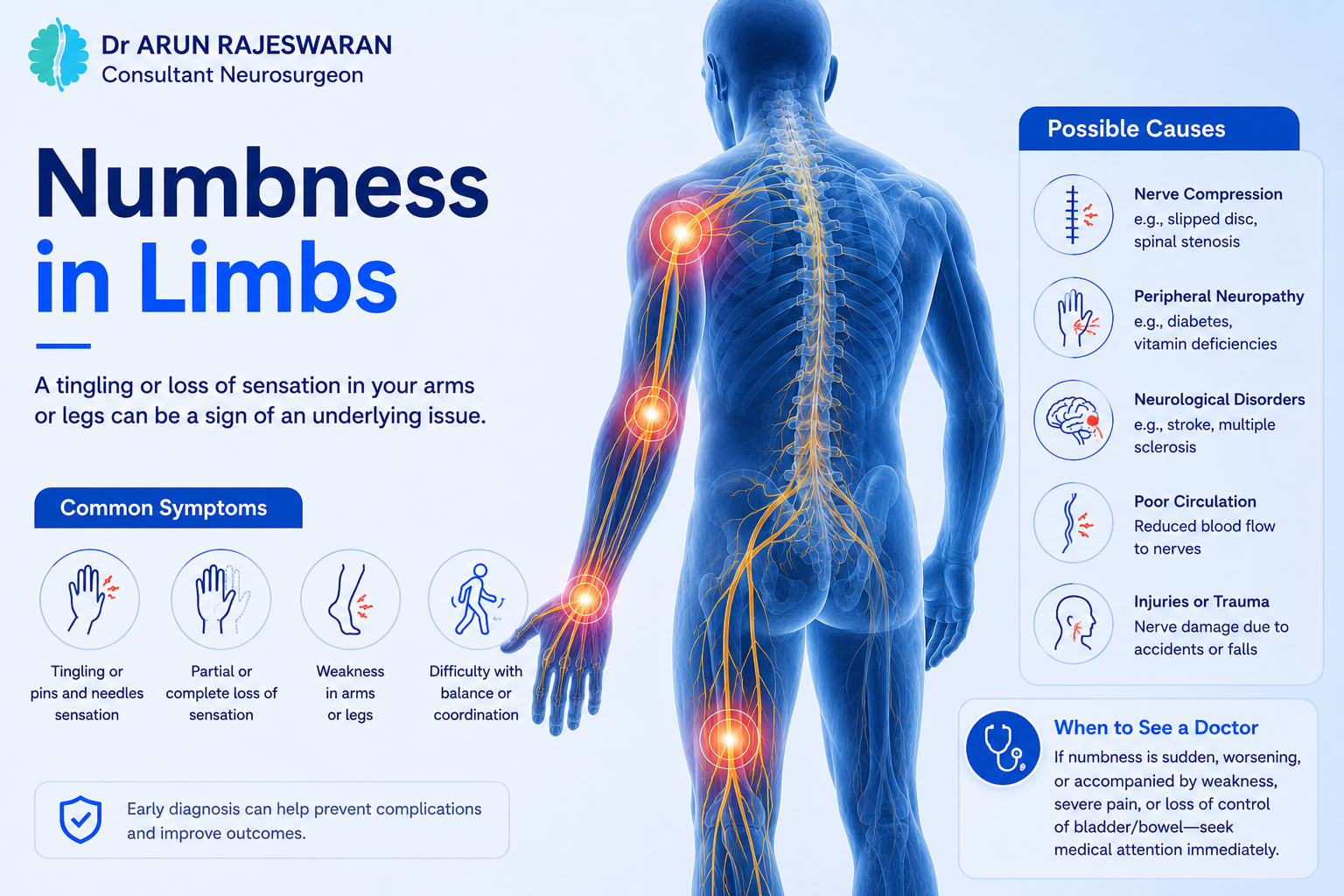
Numbness in the hands and feet means the sensory nerves carrying information from those areas to the brain are not working normally. That disruption can happen anywhere along the pathway in the peripheral nerves themselves, in the nerve roots exiting the spine, in the spinal cord, or in the brain. Finding the cause requires working out where along that pathway the problem sits.
In the UAE, the most common causes are peripheral neuropathy from diabetes or vitamin B12 deficiency, nerve root compression from cervical or lumbar disc disease, and carpal tunnel syndrome. Less commonly, numbness reflects a more serious neurological condition. This page explains how to distinguish between them.
The Anatomy Behind Numbness
Sensation travels from the fingertips and toes through peripheral nerves, into nerve roots that enter the spinal cord, up the cord to the brainstem, and finally to the sensory cortex in the brain. Numbness arises when any part of this pathway is interrupted.
Location of Problem | Pattern of Numbness | Other Clues |
|---|---|---|
Peripheral nerve (e.g. carpal tunnel) | Specific nerve distribution e.g. thumb, index, middle fingers | Worsens at night; relieved by shaking hand |
Nerve root (disc compression) | Dermatome pattern strip along arm or leg | Associated neck or back pain; worse with movement |
Spinal cord | Below a level both legs, or arm and leg same side | Possible weakness, balance change, bladder symptoms |
Brain (stroke / tumour) | One entire side of body (face, arm, leg same side) | Sudden onset; possible weakness or speech change simultaneously |
Peripheral neuropathy (systemic) | Glove and stocking pattern feet first, then hands | Symmetrical; often burning quality; gradual onset |
One-Sided vs Both-Sided Numbness: A Critical Distinction
Whether numbness is one-sided or bilateral significantly narrows the likely cause.
One-Sided Numbness
Numbness affecting one side of the body particularly if it involves the face, arm, and leg simultaneously is a stroke warning sign until proven otherwise. Sudden onset, one-sided numbness accompanied by weakness, speech difficulty, or facial drooping requires emergency assessment. Do not wait.
One-sided numbness without other features may reflect a single nerve root compression, a focal brain lesion, or a peripheral nerve injury.
Both-Sided (Bilateral) Numbness
Bilateral numbness in the feet, progressing upward to the hands over time, is the classic glove-and-stocking pattern of peripheral neuropathy. Diabetes is the most common cause in the UAE, where diabetic neuropathy is highly prevalent given the region’s diabetes rates.
Bilateral leg numbness arising below a specific level of the spine with or without back pain suggests spinal cord compression. This can progress to weakness and bladder problems if not treated.
Both arms and legs affected simultaneously, coming on over days, raises the possibility of Guillain-Barré syndrome, a serious but treatable inflammatory nerve condition.
Common Causes Explained
Diabetic Neuropathy
Chronically elevated blood sugar damages small nerve fibres, producing a burning, tingling, or numb sensation starting in the feet and progressing upward. It is the most common peripheral neuropathy in UAE patients.
Vitamin B12 Deficiency
B12 is essential for the myelin sheath that insulates nerve fibres. Deficiency common in vegetarians, those on metformin, and certain South Asian dietary patterns produces tingling, numbness, and sometimes gait problems. It is treatable and potentially reversible if caught early.
Cervical Disc Compression
A herniated disc in the neck compresses a nerve root, sending numbness down a specific arm into particular fingers. The pattern depends on which disc level is affected; C5/C6 typically affects the thumb and index finger; C6/C7 affects the middle finger. Associated neck pain and arm pain are common.
Lumbar Disc Compression
A lumbar herniated disc compresses a nerve root supplying the leg. The numbness follows a specific leg distribution: outer thigh and top of foot for L4/L5; heel and sole for L5/S1.
Carpal Tunnel Syndrome
Compression of the median nerve at the wrist produces numbness in the thumb, index, and middle fingers. Classically worse at night and with sustained hand positions. Common in people who perform repetitive hand movements or work at a keyboard.
Multiple Sclerosis
MS can produce patchy numbness anywhere in the body, often without an obvious anatomical pattern. It may come and go. In a young adult with unexplained, episodic neurological symptoms, MS should be considered.
When Numbness Is Urgent
- Sudden numbness on one side of the face, arm, and leg possible stroke. Call emergency services immediately.
- Numbness in both legs associated with back pain plus bladder or bowel changes possible cauda equina syndrome. Emergency assessment required.
- Rapidly progressive numbness spreading from feet upward over hours to days possible Guillain-Barré syndrome. Seek urgent hospital assessment.
- Numbness after a significant neck or back injury spinal cord injury must be excluded.
Diagnosis and Tests
Clinical examination begins by mapping the exact distribution of numbness. This tells the clinician which part of the nervous system is likely affected before any test is ordered.
- Nerve Conduction Study (NCS): measures the speed and strength of electrical signals in peripheral nerves. Identifies peripheral neuropathy, carpal tunnel syndrome, and nerve root dysfunction.
- Electromyography (EMG): assesses electrical activity in muscles. Helps differentiate nerve damage from muscle disease and identifies which nerve root or peripheral nerve is affected.
- MRI Spine: identifies disc herniations, spinal canal narrowing, and cord compression. Essential when nerve root or cord involvement is suspected.
- MRI Brain: indicated when the distribution suggests a central cause particularly one-sided numbness with sudden onset or accompanying neurological changes.
- Blood tests: full blood count, B12, folate, HbA1c, thyroid function, and inflammatory markers to identify systemic causes.
Treatment Options
Treatment depends entirely on the identified cause.
- Diabetic neuropathy: optimise blood glucose control; gabapentin or pregabalin for symptom management
- B12 deficiency: replacement therapy with B12 injections or high-dose oral supplementation
- Carpal tunnel syndrome: wrist splinting at night; steroid injection; surgical decompression if persistent
- Cervical or lumbar disc compression: physiotherapy; nerve pain medication; injection; surgery if neurological deficit is progressive
- Multiple sclerosis: managed by a neurologist with disease-modifying therapy
When to See a Neurosurgeon
A neurosurgical opinion is appropriate when imaging identifies a structural cause: a herniated disc compressing a nerve root or spinal cord, spinal canal stenosis, or a brain lesion. If neurological deficits such as weakness are developing alongside the numbness, earlier specialist review is important
Conclusion
Numbness in the hands and feet has a broad range of causes from the benign to the urgent. The distribution pattern and associated symptoms guide the clinical workup. In the UAE, diabetic neuropathy and cervical disc disease are among the most common causes and both are diagnosable and treatable.
If you are experiencing persistent neurological symptoms, consult Dr. Arun for a detailed evaluation and personalised treatment plan.
Frequently Asked Questions
Numbness means the sensory nerves supplying those areas are not transmitting signals normally. The cause can be peripheral in the nerves themselves, from diabetes or a trapped nerve or central, from the spine or brain. The distribution and pattern of numbness, combined with any associated symptoms, guides the diagnosis.
Yes. One-sided numbness affecting the face, arm, and leg simultaneously is a stroke warning sign and requires emergency assessment. A brain tumour near the sensory cortex can produce progressive one-sided numbness. These brain-related causes are less common than peripheral or spinal causes, but the sudden onset of one-sided numbness should always be taken seriously.
Tingling and numbness in the feet and hands can be an early sign of diabetic peripheral neuropathy. This results from damage to the small nerve fibres caused by prolonged high blood sugar. The pattern is characteristically symmetrical and begins in the feet before affecting the hands. If diabetes is not already known, a blood test including HbA1c will identify undiagnosed diabetes.
Multiple conditions can cause numbness: peripheral neuropathy from diabetes or B12 deficiency, nerve root compression from disc disease, spinal cord compression from stenosis or a lesion, multiple sclerosis, stroke, transient ischaemic attack, and in rarer cases, brain tumour near sensory pathways. The clinical pattern and distribution of numbness helps identify the most likely cause.
Yes. A herniated disc in the cervical spine compresses the nerve root at that level, producing numbness, tingling, and sometimes pain radiating down the arm into specific fingers. The pattern depends on which disc level is affected. C5/C6 herniation typically causes symptoms in the thumb and index finger; C6/C7 affects the middle finger.
Yes. Vitamin B12 deficiency causes peripheral neuropathy tingling, numbness, and in severe cases, difficulty with balance and coordination. It is treatable and often reversible with adequate B12 replacement if identified early. B12 deficiency is more common in vegetarians, those taking long-term metformin for diabetes, and older adults with reduced absorption.